At that time, the library was headed by Elžbieta Jodinskaitė—a librarian, philanthropist, and distributor of the forbidden Lithuanian press. In 1940, after the Soviets occupied Lithuania, the buildings were nationalized. When the Second World War began, the library operating in building No. 14 was moved to Birutės St. 2 in 1941, and the building was handed over for the needs of the Wehrmacht. After the war, officers’ house was established here, and in the hall on the 2 nd floor, numerous events, dances, and New Year’s Eve parties, remembered by many to this day, were arranged.
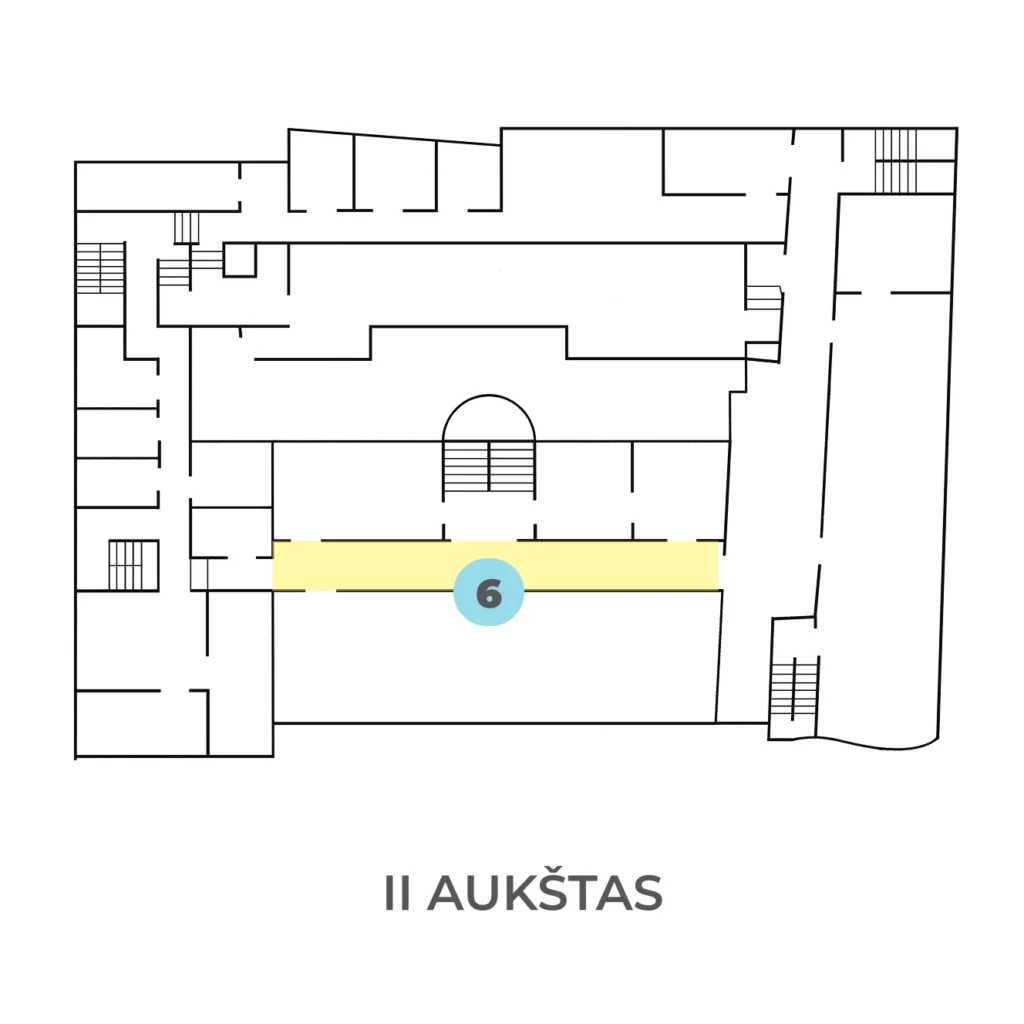
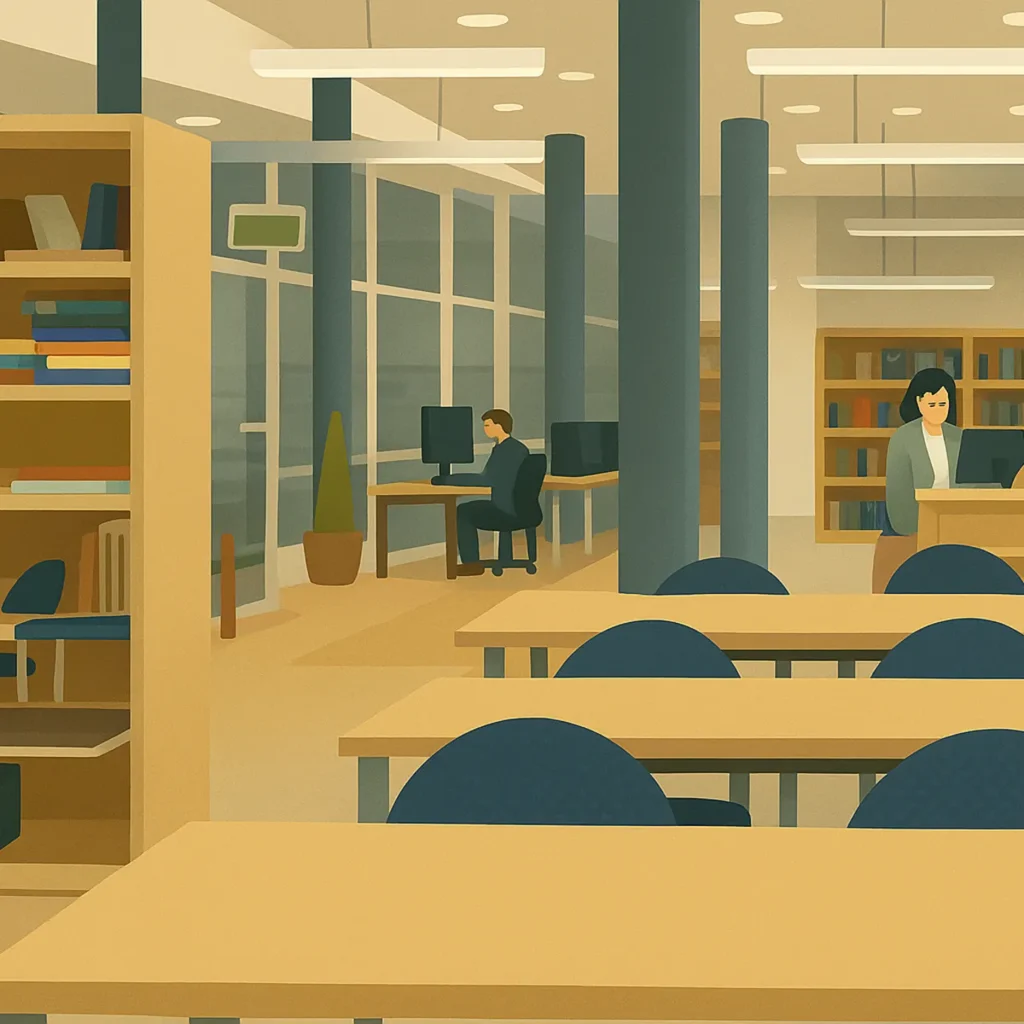
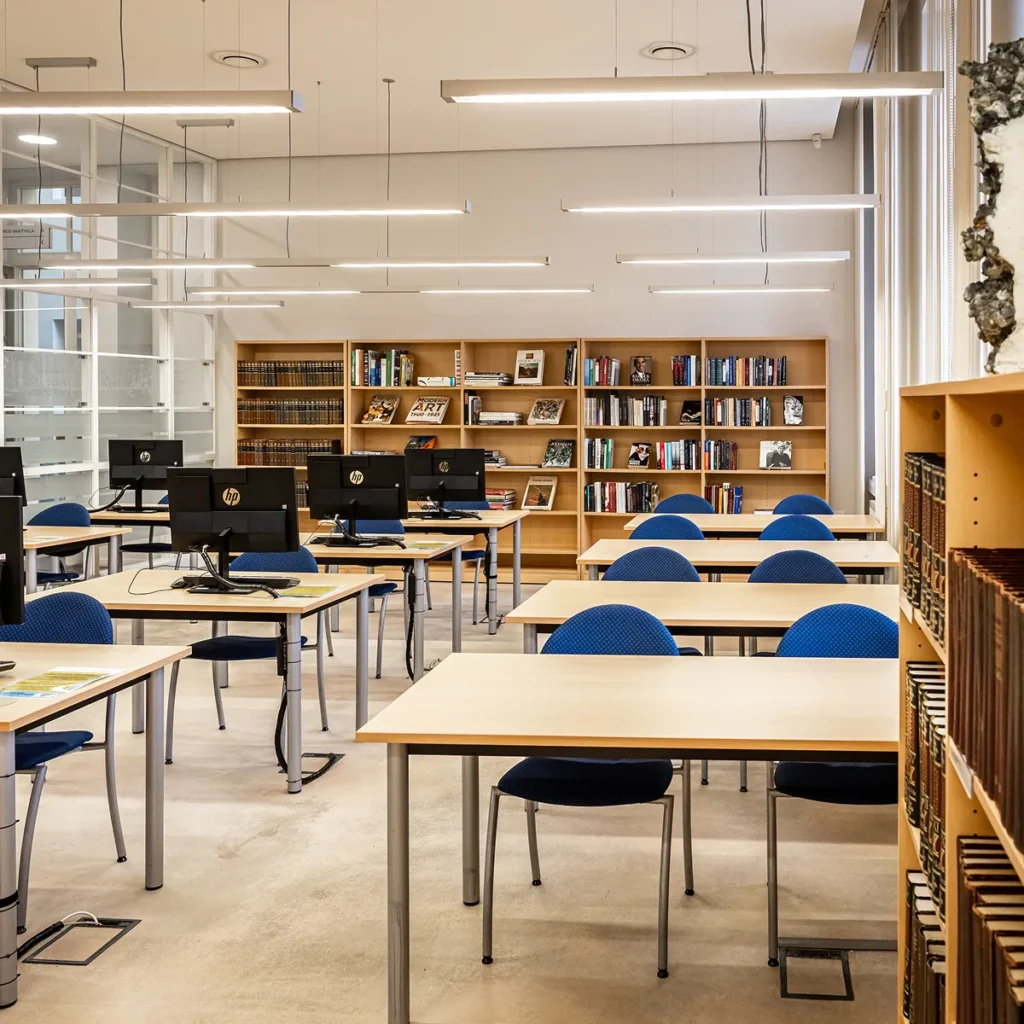
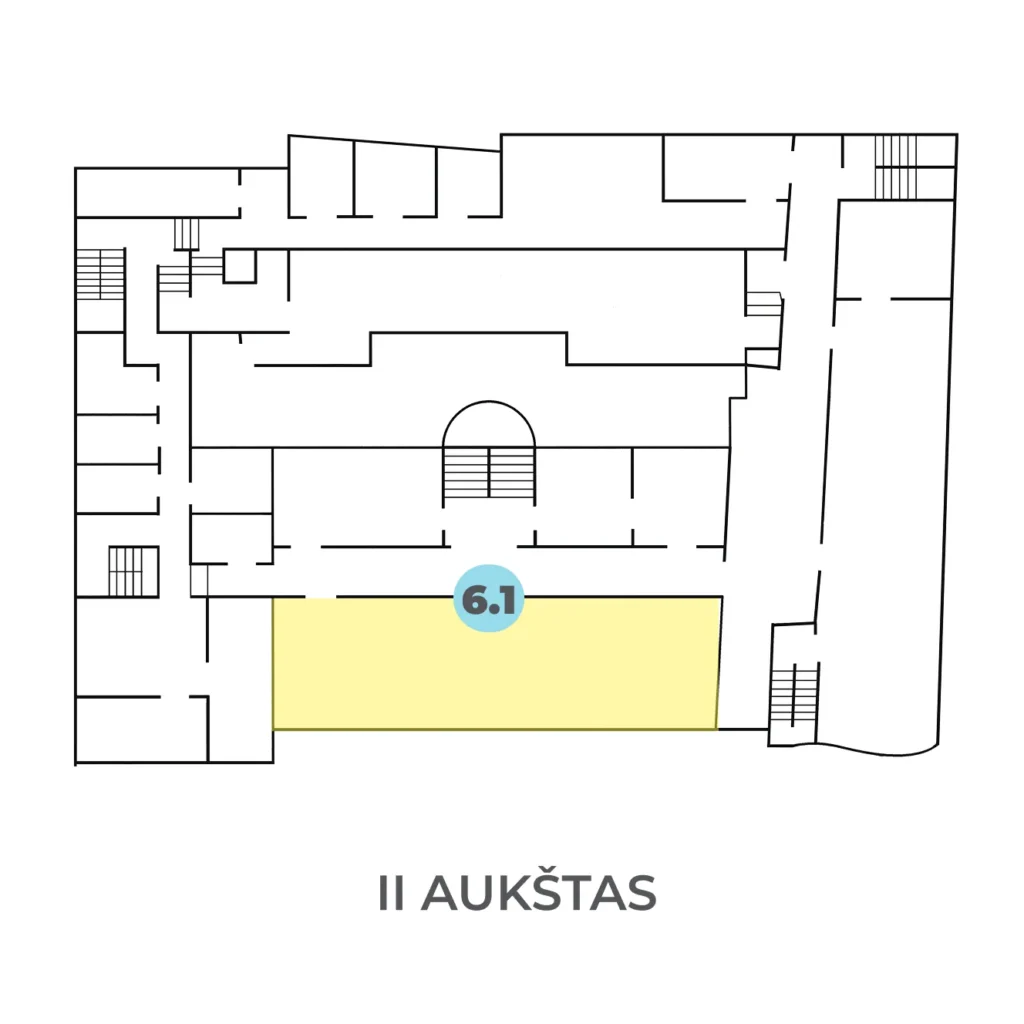
Today the second floor is again dedicated to the Main Reading Room, where you can study and work independently. The open collection of the Reading Room consists of informative publications from different fields of science: philosophy, sociology, economics, medicine, literary science, geography, history, etc. The Reading Room is equipped with 10 computerized workstations.
Employees are ready to help you find the necessary information, provide consultations on using the library’s subscribed databases, and handle inquiries. In the databases available for use at the library, you will find electronic books, scientific articles, conference reports, standards, and other statistical, analytical, and scientific information necessary for studies.
In the glass partition of the Reading Room, you can see a glass frieze—a horizontal decorative band. It was designed by participants of the 9 th International Stained Glass Symposium “1+1” organized by the Vilnius Academy of Arts Stained Glass Studio in 2014. The glass artworks were created by 17 artists—12 Lithuanians and 5 foreigners. The author of this initiative was the late professor and National Prize laureate Algirdas Dovydėnas. All the artworks were created using the slump glass technique, which is particularly suitable for typographic compositions with fonts.
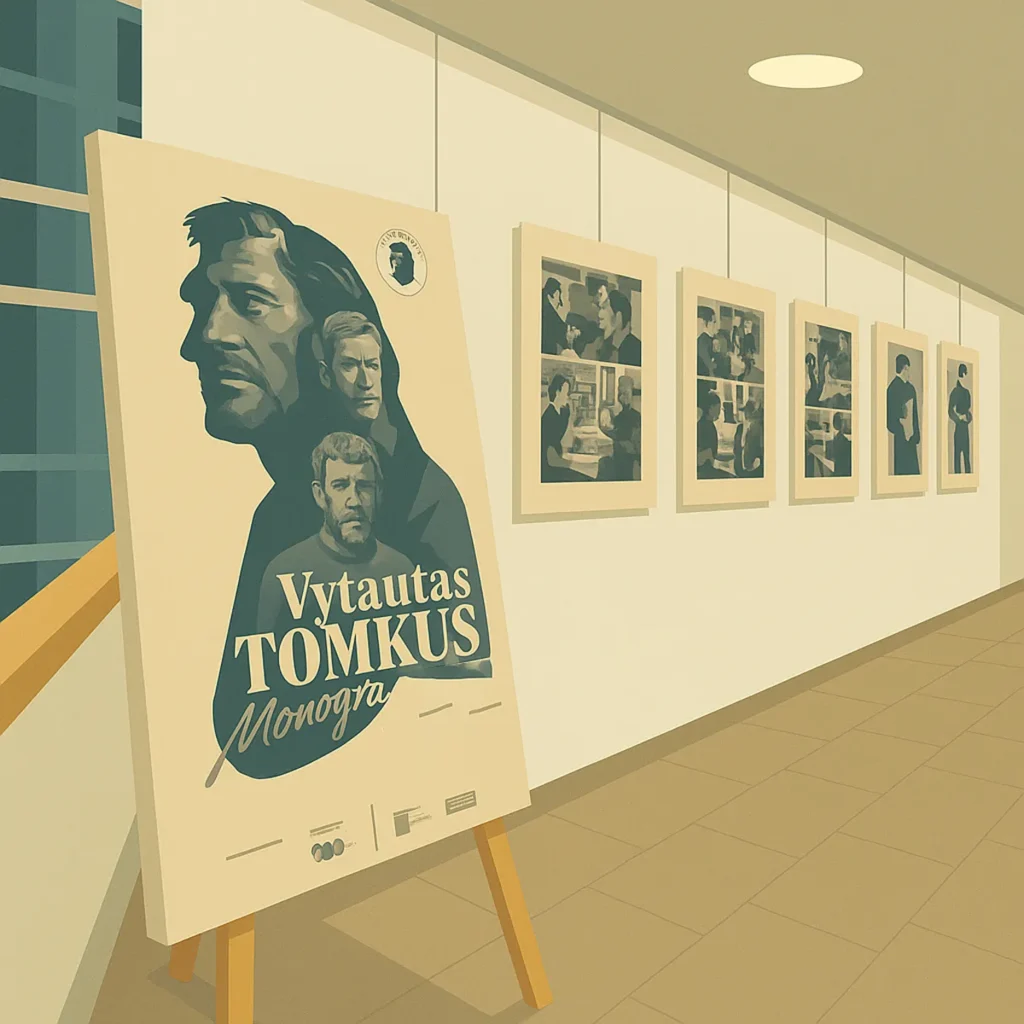
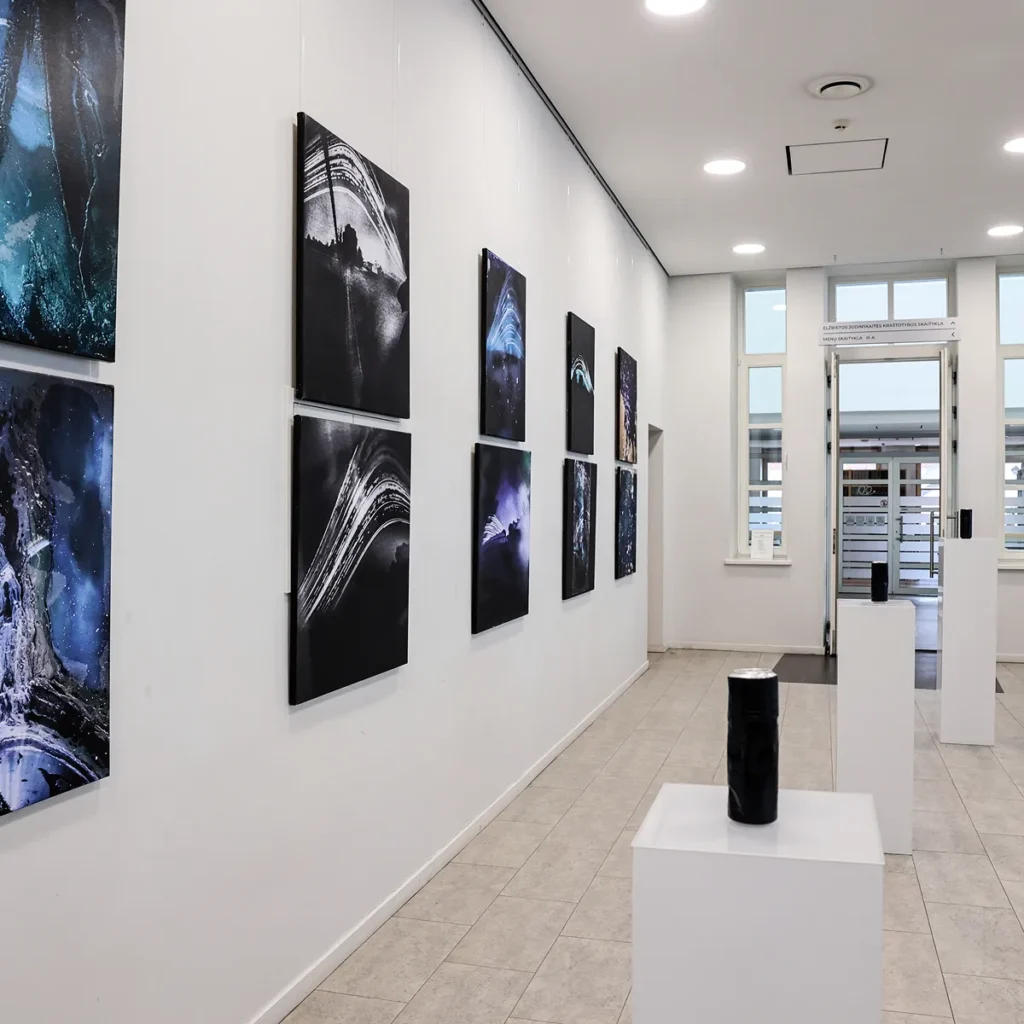
The library organizes art exhibitions of various formats and topics. On this floor, you can typically find art exhibitions of paintings, graphics, and photography by professional local or national artists. Here, you can also see anniversary and documentary exhibitions that present the history of the city, region, or prominent personalities. You can learn about the current exhibition on the exhibition presentation sheet.
Turn right after exiting the Main Reading Room and take a brief pause on the bridge.