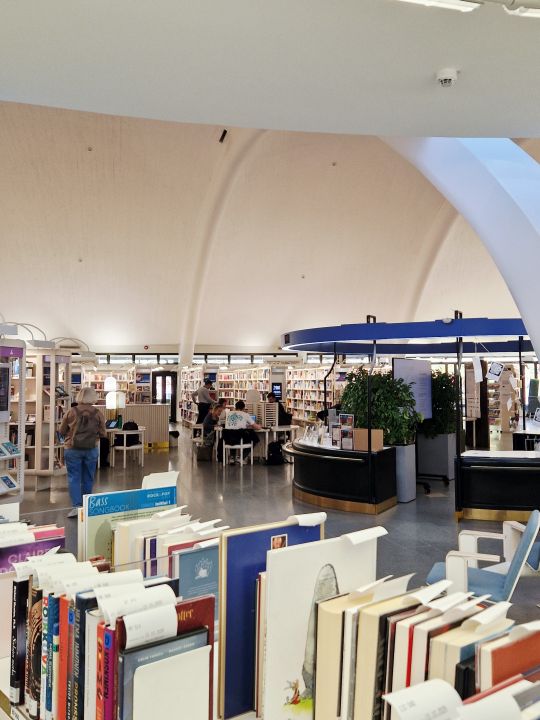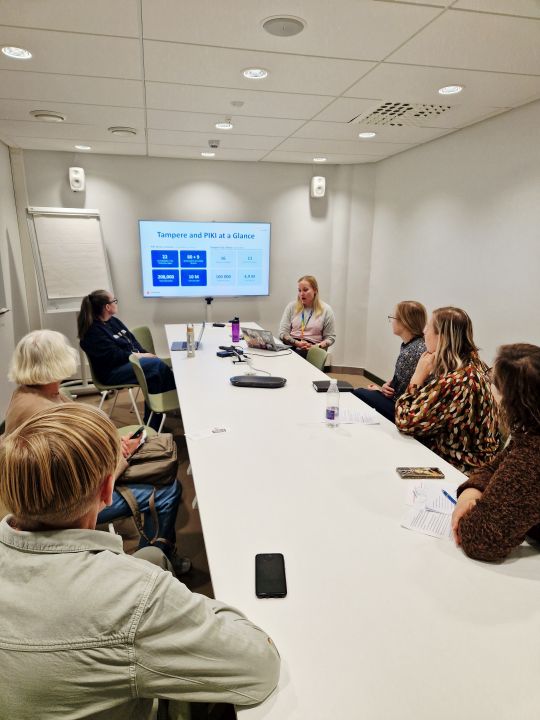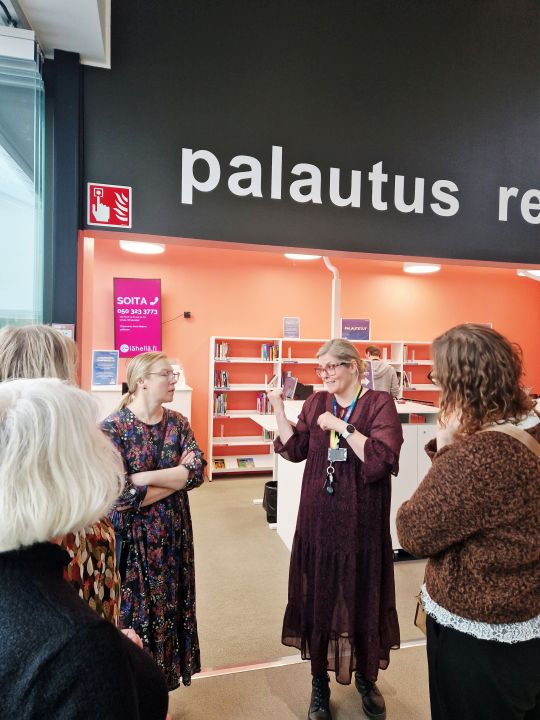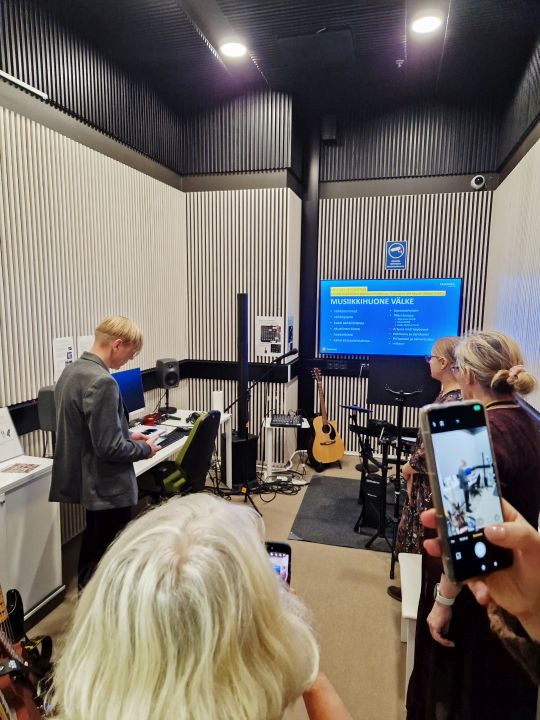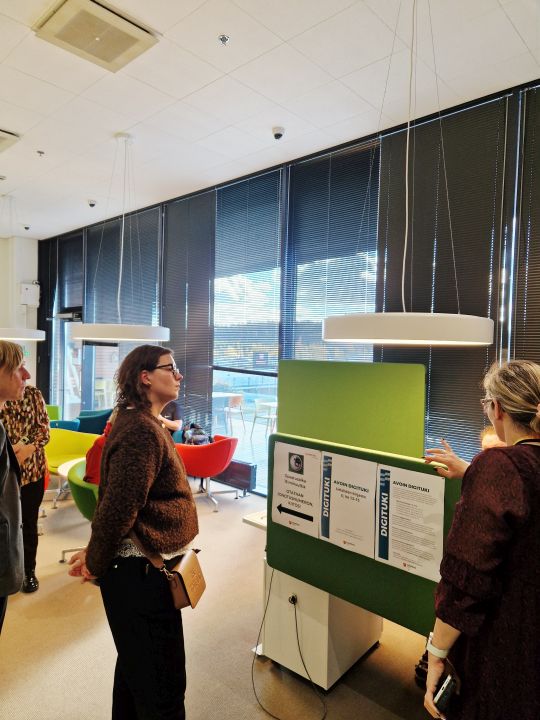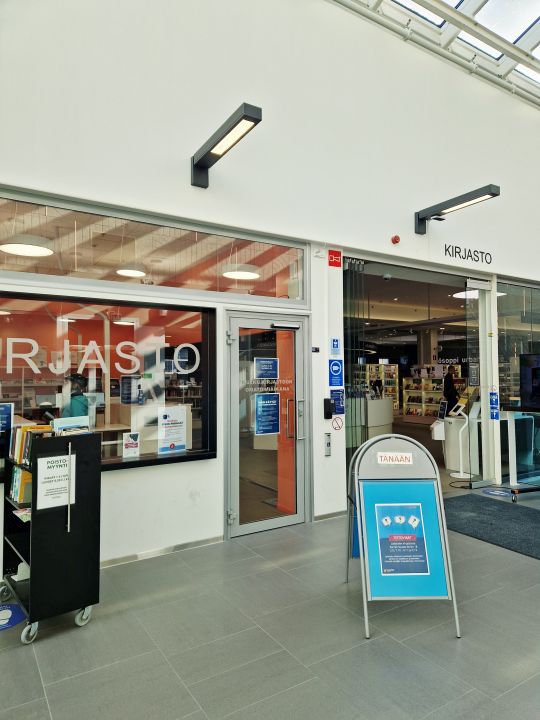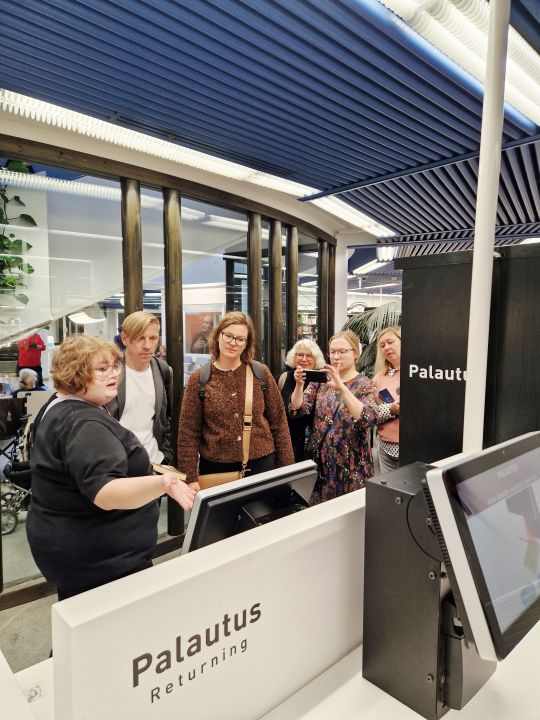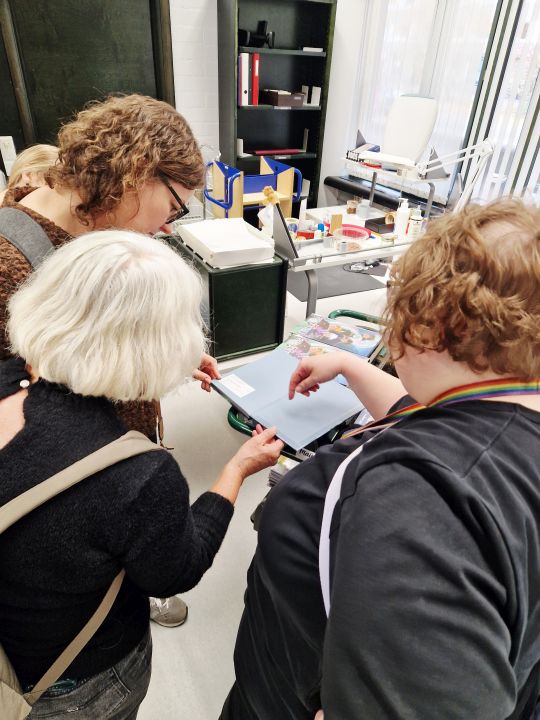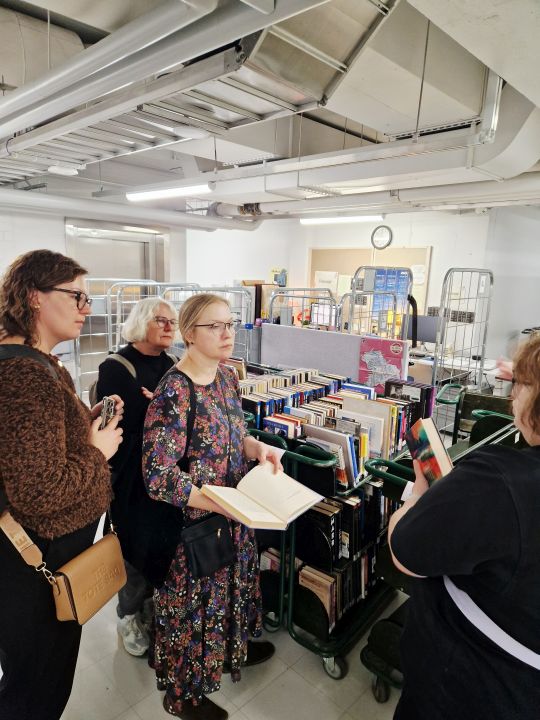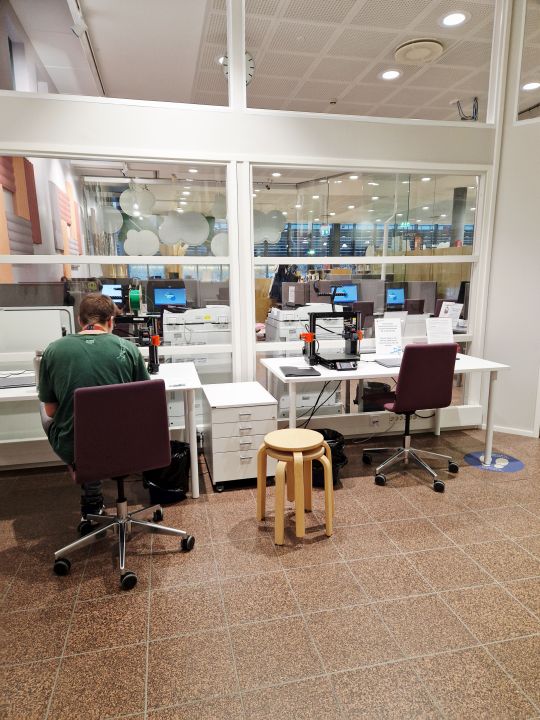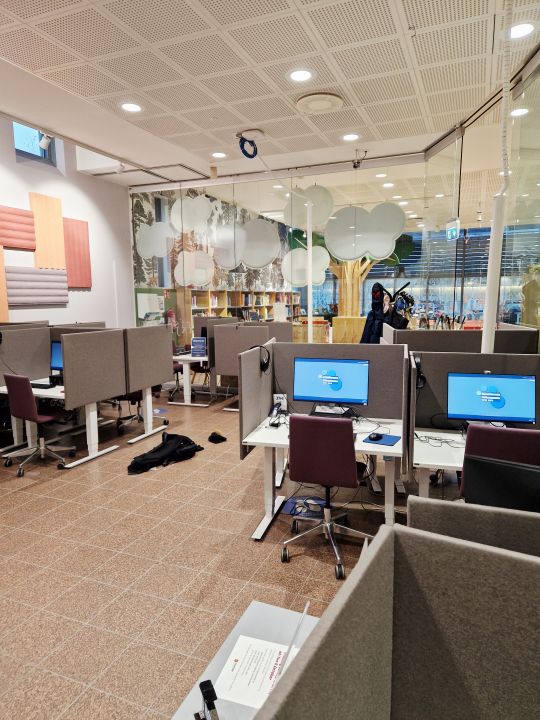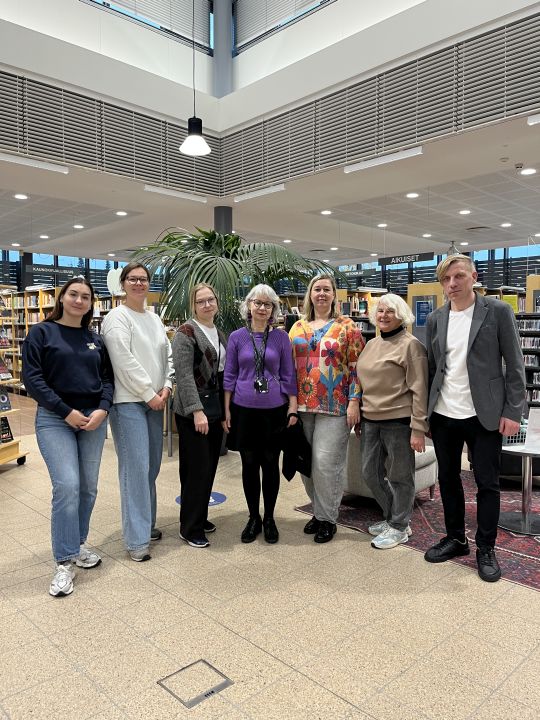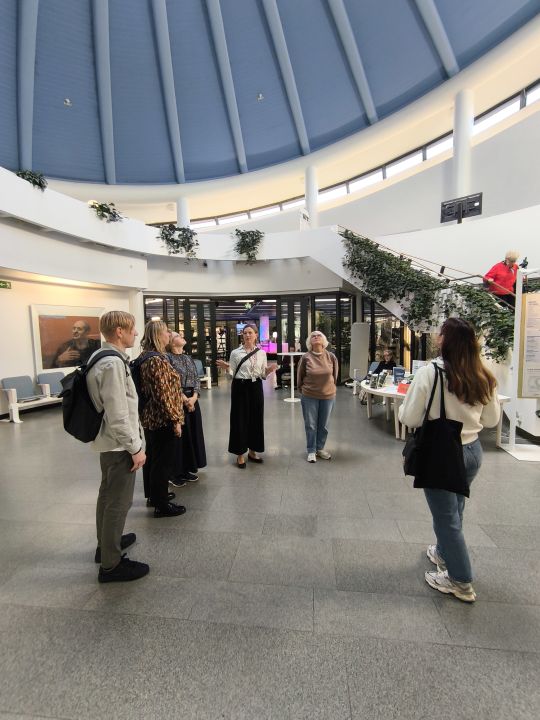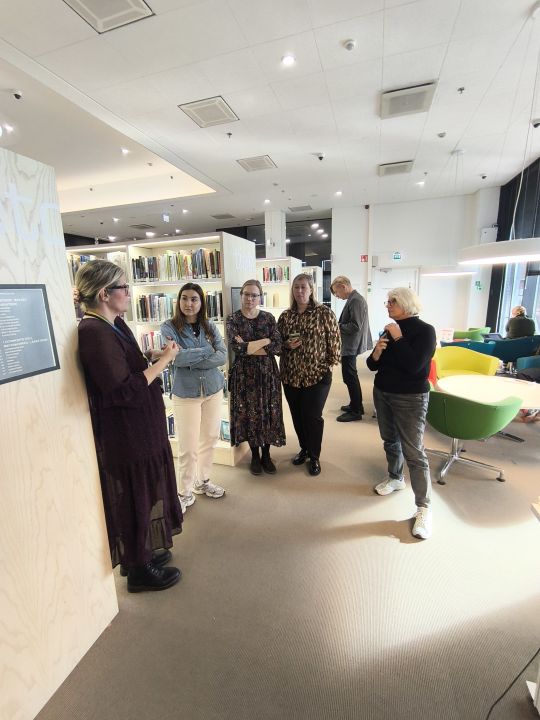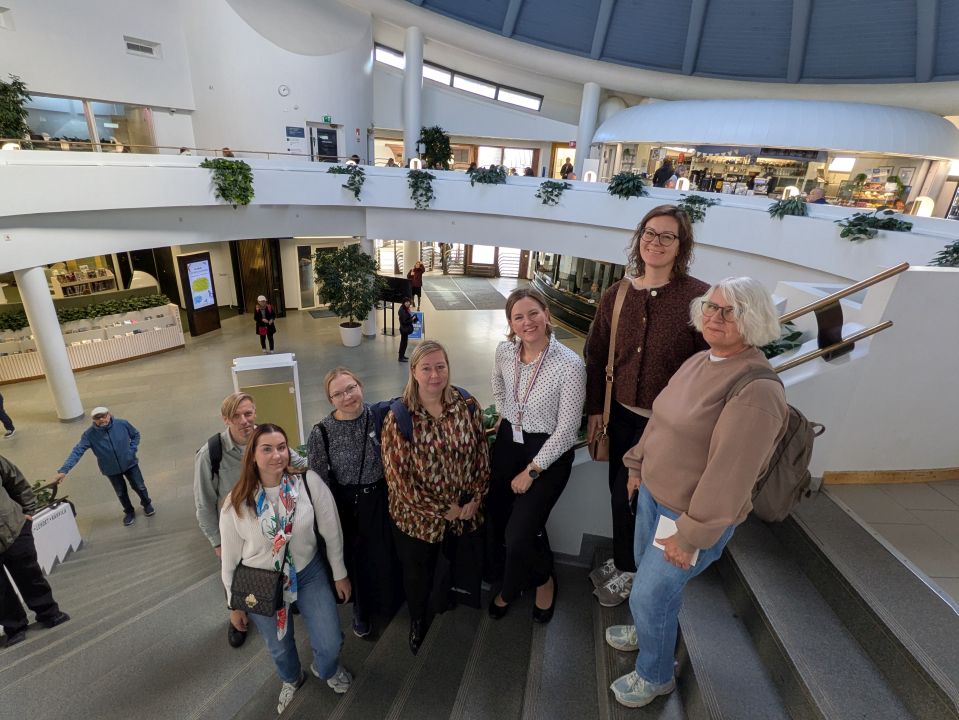
From 5 to 9 October 2026, staff members of the Gabrielė Petkevičaitė-Bitė Panevėžys County Public Library took part in a study visit to Tampere City Libraries in Finland. The visit was organised as part of the programme “Nordic and Baltic Libraries: Promoting Digital Innovation”. Participants explored modern library service models, digital services, user engagement, organisational culture and the development of spaces designed to meet community needs.
The visit provided an opportunity to gain first-hand insight into Finnish library practices and explore how technology, well-designed services and relationships built on trust can help libraries become an integral part of people’s everyday lives.
A Library Is More Than Books
Finland has a particularly strong reading culture. High book lending figures reflect the close connection between Finnish society, books and libraries. Libraries play an important role not only in providing access to information but also in supporting learning, social interaction and personal interests.
Finnish libraries strive to remain close to the people they serve – accessible, welcoming and responsive to a wide range of needs. Promoting reading is therefore not simply about encouraging people to borrow books, but also about consistently strengthening the library’s connection with its community.
The experience of Tampere City Library’s Metso Main Library and its branches demonstrated how a modern library can serve as a cultural center, a community meeting place and a space for independent learning. Visitors are not merely recipients of services. They actively explore what the library has to offer, use its facilities and services independently, provide feedback and contribute to improving library activities.
Digital Services That Empower Users
During the visit, attention was paid to digital literacy support and personalised assistance for library users. Tampere City Libraries offer dedicated consultation hours, while those requiring more in-depth support can book an individual one-hour appointment in advance.
This service not only helps users address specific challenges but also develops their digital skills and builds confidence in their abilities. Regularly organised consultations encourage people to seek assistance when needed and pursue learning opportunities tailored to their individual needs.
Reflecting on the visit, Klaudija Pelanytė, Head of the Communication and Cultural Management Department, also highlighted the convenience of the libraries’ self-service system. Through a centralised booking portal, visitors can independently reserve spaces and access services using their library card and PIN code. Clear instructions for using facilities and equipment are provided throughout the library, enabling visitors to decide how and when to make use of the available resources.
These solutions illustrate an important principle – digital innovations are most valuable when they make everyday life easier, improve access to services and give people greater independence. At the same time, they help foster personal responsibility and lifelong learning habits.
Trust in Library Users – Supported by Thoughtful Organisation
For Žilvinas Kropas, Head of the General Affairs Department, the most memorable aspect of the visit to Tampere’s libraries was not the modern equipment or abundance of technology, but the approach to people – trust in library users, encouragement of their independence and personalised attention.
The visit also highlighted the practical aspects of organising library spaces. Enabling visitors to use equipment and services independently requires more than investment in technology. It also involves ensuring accessibility, safe use, clear guidelines and a convenient booking system. The experience of Tampere’s libraries demonstrated that a successful self-service model depends not only on technological solutions but also on carefully planned and consistently managed processes.
This is a valuable insight for planning services at our own library – creating a user-friendly environment means balancing visitors’ freedom and independence with clear information, safety and well-managed infrastructure.
Building Democracy Together with the Community
One of the highlights of the visit was a presentation by Tampere City librarian Marjo Hietikko entitled “The Fortress of Democracy – Putting Democracy into Practice in Libraries”. The presentation emphasised that democracy is not merely a defined system or set of rules. It is an ongoing process that requires civic skills, media literacy, open dialogue and safe spaces where people can come together.
Libraries play an important role in this process. They provide opportunities for people not only to access services but also to actively shape community life, initiate activities, meet others and engage with different perspectives. This is supported through a variety of events, community workshops, vinyl listening evenings and partnerships with other organisations.
The key is to listen to the community and work together. When people feel welcome, can express their opinions freely and see that their suggestions are taken into account, the library becomes a place where democracy is experienced in everyday life.
This perspective is reinforced by the observations of Irmina Girnienė, Head of the Regional Libraries Strategic Development Department. She noted that Finnish library users are neither passive observers nor occasional visitors who simply come to borrow books. They use library spaces independently, actively participate in surveys, provide feedback and contribute to service improvements. This relationship demonstrates that meaningful community engagement begins with trust.
Bringing New Ideas and Experiences Home
The study visit to Finland offered an opportunity not only to learn from other libraries but also to reflect on our own practices from a fresh perspective. The examples observed during the visit highlighted the importance of combining digital innovation, community engagement and an organisational culture built on trust.
The knowledge gained can support the development of individual digital literacy consultations, self-service facilities, space booking systems and new ways of involving the community in shaping library activities. The experience of Tampere City Libraries demonstrated that personalised digital consultations help visitors overcome challenges in using technology, develop essential digital skills and become more confident and independent when accessing online services.
The Finnish experience reminds us that the strength of a modern library lies not only in technology or contemporary spaces. It lies in the ability to listen to people, trust them, provide opportunities for learning and encourage collaboration. This approach is what enables libraries to remain vibrant, open and essential to their communities.
The visit was funded by the Nordic Council of Ministers’ Office through the NB8 Grants programme project “Nordic and Baltic Libraries: Promoting Digital Innovation” and by the Martynas Mažvydas National Library of Lithuania through its project “Systematic Competence Development for Cultural Sector Employees”.