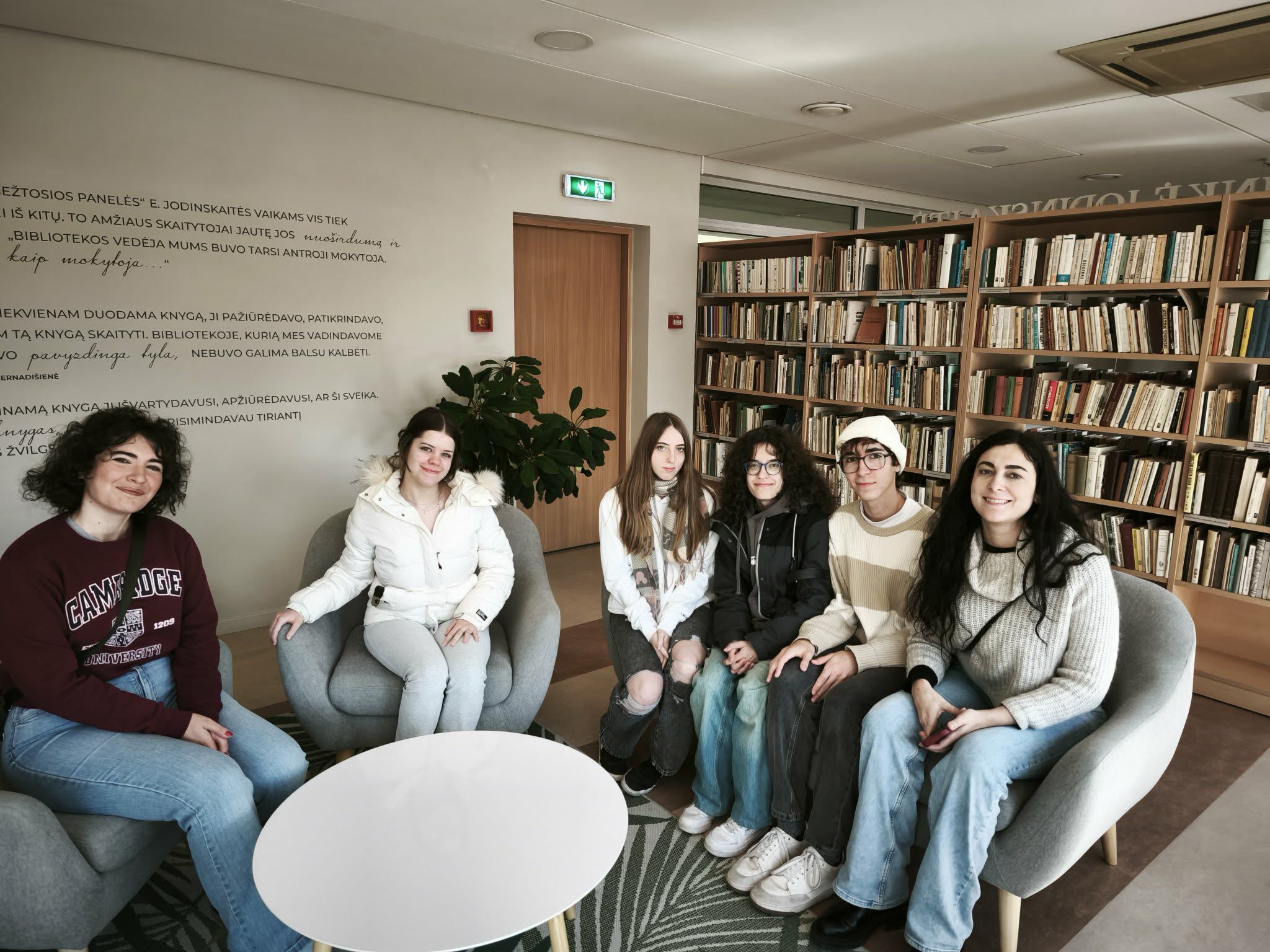
From April 27 to 30, the library hosted guests from Spain – students and teachers from the Cristóbal de Monroy Adult School, who visited under the Erasmus+ programme. The aim of the visit was to learn about the library’s non-formal adult education activities and to gain hands-on experience with methods used in language clubs to develop speaking skills.
During their stay, the visitors from Seville actively participated in the library’s activities. They joined a Language Café session, where they communicated with other participants not only in English, but also in Spanish and French. This experience proved beneficial for everyone involved, helping to improve language skills while encouraging meaningful cultural exchange.
During the English conversation club “Let’s Talk”, the guests introduced their school, the Seville region, and the city of Alcalá de Guadaíra, and shared their experience of participating in the Erasmus+ programme. Club members had the opportunity to learn more about the region’s culture and traditions, and the meeting was further enriched by a dance performance by the visitors. The second part of the session was dedicated to a discussion on the role and significance of customs, habits, and everyday rituals in Lithuanian and Spanish cultures.
Exploring local culture is an important part of the Erasmus+ programme, so the guests also took interest in Panevėžys’ cultural and historical sites, visiting the old railway station, art galleries, and parks. Four students, accompanied by two teachers, carried out assigned tasks each day and later took part in reflection sessions where they discussed their experiences and impressions.
On the final day of the visit, a reflection session was held with the participation of the visit curator, Virginija Švedienė. During the session, the guests shared their feedback and insights. Teachers Ana and Rosalia noted that, as language teachers, they found it particularly valuable to observe how language clubs operate. According to them, the experience inspired them to consider implementing similar activities in their own school and highlighted the importance of focusing not only on formal learning (such as grammar), but also on developing speaking skills.
Students Andrea, Esteban, Alicia, and Azahar especially appreciated the opportunity to engage in live conversations in English with club participants. They were impressed by the library’s openness to everyone – children, young people, and adults alike – as well as by its welcoming and functional spaces that encourage visitors to spend time there. According to the guests, the library’s democratic environment fosters a sense of openness and invites communication. They also emphasized that they would definitely recommend visiting Lithuania, which left them with a very positive impression.
Virginija Švedienė
Specialist of Educational Activities