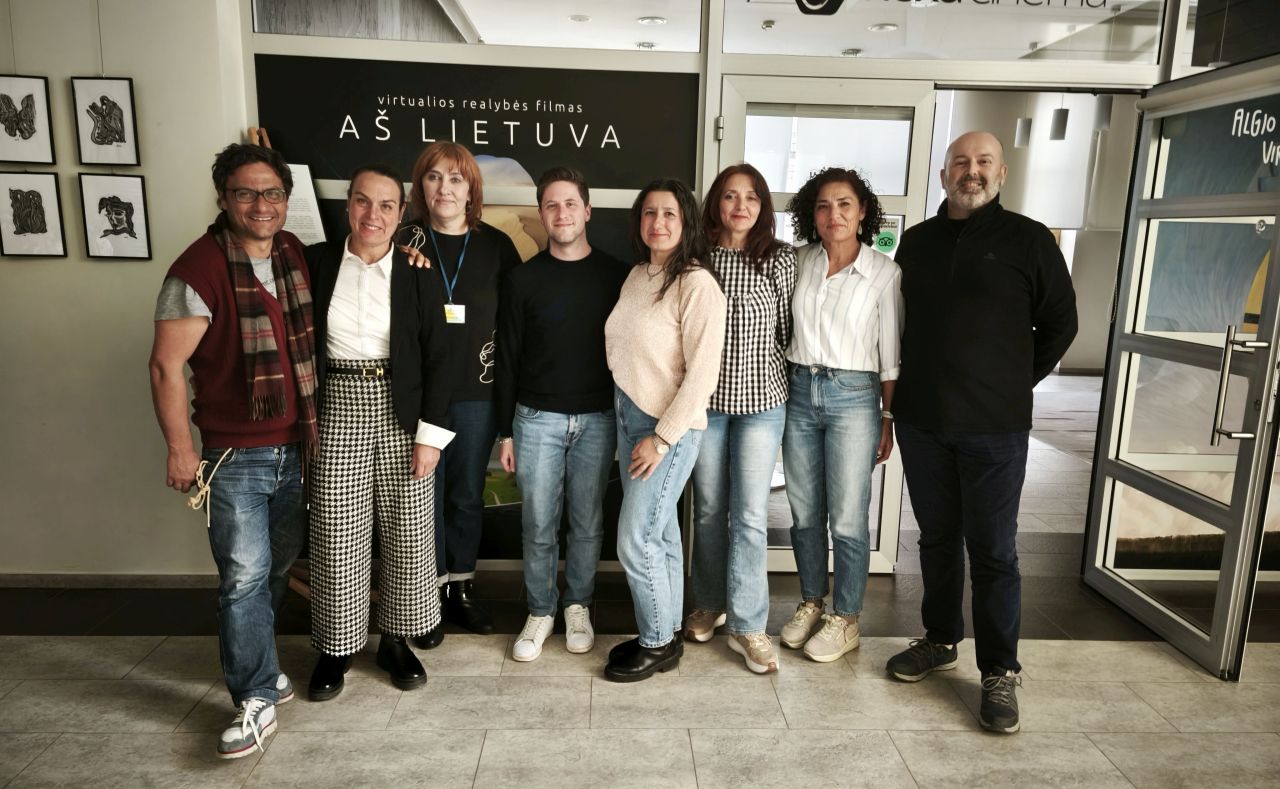
From April 20 to 23, the library welcomed guests from Spain – representatives of the Ayamonte Adult Language School, who visited as part of the Erasmus+ programme. The aim of the visit was to explore the library’s non-formal adult education activities and to experience first-hand the methods used in language clubs to develop speaking skills.
During their stay, the guests actively engaged in a variety of library activities. They took part in a Language Café session, where they had the opportunity to interact with library visitors not only in English, but also in Spanish and French. It provided an excellent setting for both language practice and cultural exchange.
At the English conversation club “Let’s Talk”, the guests introduced their school, the Huelva region, and the town of Ayamonte. They shared insights into the region’s history, culture, and gastronomy. Later, together with club members, they explored the topic “The Art of Conversation”, discussing effective communication, the importance of active listening, and cultural differences in communication styles.
The Spanish guests also participated in four specially designed English language sessions led by Virginija Švedienė, head of the “Let’s Talk” club. These sessions incorporated a variety of methods, including storytelling and visual thinking exercises inspired by the library’s exhibitions. One session featured a short film screening, which served as a starting point for discussion and exchange of ideas.
The guests also attended a thematic session titled “Natural Disasters”. The discussion covered topics such as climate change, the increasing frequency of extreme weather events, their impact on communities, preparedness for emergencies, and the importance of international cooperation in responding to such challenges.
Guests’ Impressions
The visit left a very positive impression on both teachers and learners.
Teacher Pedro highlighted its educational value: “This visit was especially valuable for us from a learning perspective, as we also use the communicative approach as one of the main methods in our school, and the methodology applied in your language clubs is very similar to what we do. We are planning to start conversation clubs in our school, so your experience was very interesting and inspiring for us.”
Learners’ feedback also reflected their enthusiasm. Bella shared: “Even before the visit, I looked into Lithuania and your library, and I was very pleasantly surprised by what a wonderful country it is (I knew nothing about Lithuania before). The library truly impressed me with the variety of activities and opportunities it offers.”
Encarnación highlighted the atmosphere of the library: “I really liked that visitors can feel free in the library – unlike in Spanish libraries, there is no requirement to remain silent everywhere.”
Ignacio emphasised the uniqueness of the spaces: “I was very impressed by the library spaces – they are full of light and culture. A wide range of activities is very well organised here, and everyone can choose according to their needs.”
Nieves pointed out the importance of community: “I think the most important thing in your library is the opportunity to communicate. Your winters are long and cold, and the library is a place where people want to come and spend time together with like-minded ones.”
Francisco described the library as more than just a traditional space: “It is not just a library – it is a centre of culture and integration where people can feel good and spend their time meaningfully.”
Aurelija was pleasantly surprised by the learning opportunities: “I was very pleasantly surprised that people can learn languages in the library.”
At the end of the visit, the guests also noted that when applying for Erasmus+ mobility, they could choose from three countries – Finland, Slovenia, and Lithuania – and they were very happy to have chosen Lithuania.
This visit once again confirmed that the library is not only a place of knowledge, but also a space for connection, communication, and intercultural dialogue.
Virginija Švedienė
Specialist of Educational Activities